


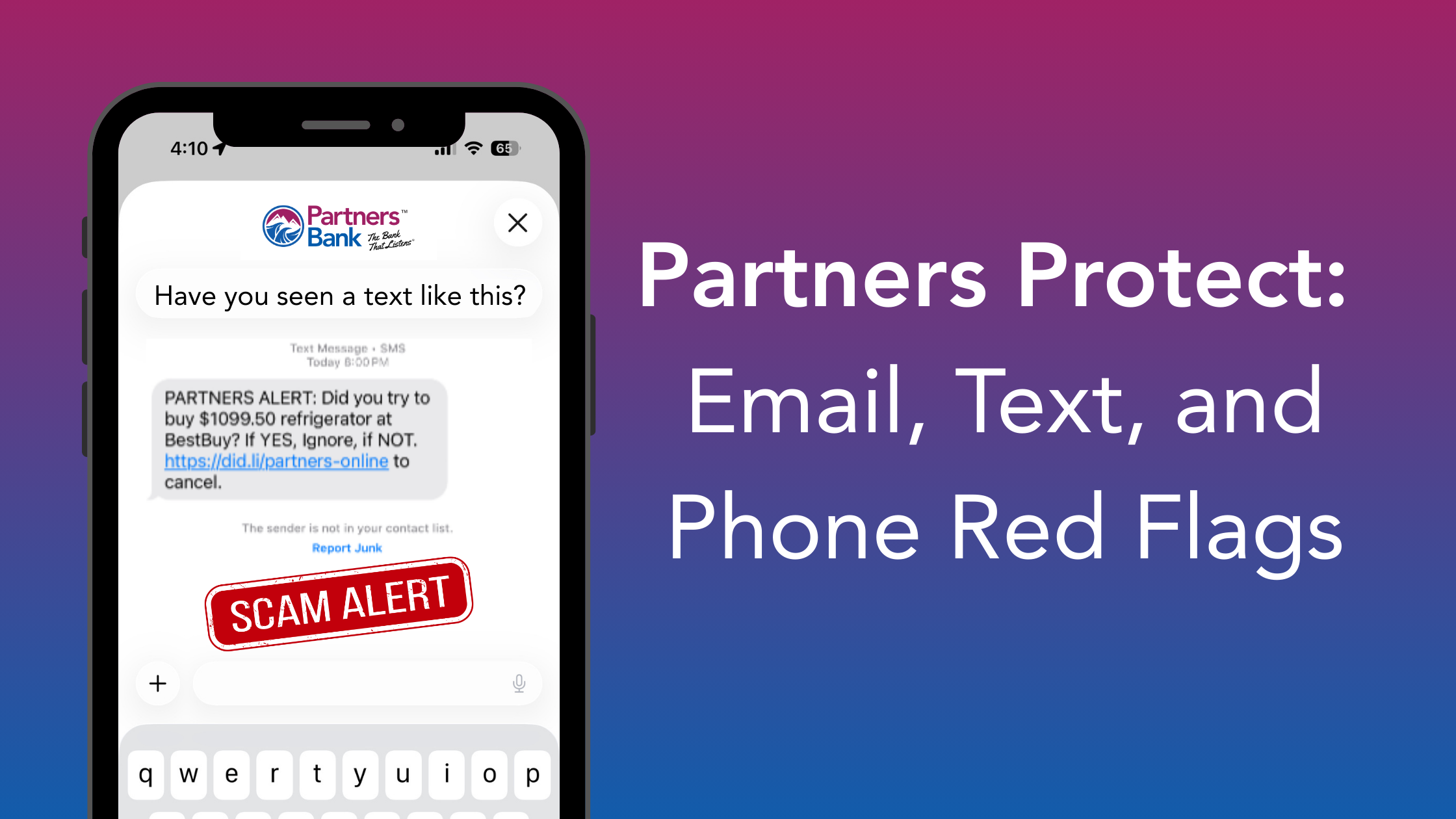
Partners Protect: Email, Text, and Phone Red Flags
Every day, thousands of people fall victim to fraudulent emails, texts, and phone calls from scammers impersonating their bank. At Partners Bank, your security is our top priority.
The statistics are alarming – in 2024 alone, scammers stole $16.6 billion from consumers, according to FBI’s Internet Crime Complaint Center. But armed with the right knowledge, you can protect yourself and your hard-earned money.
What Is Phishing and Why Should You Care?
Phishing is a sophisticated online scam where criminals create fraudulent communications that appear to come from legitimate sources. These scammers use emails, text messages, and phone calls to trick you into revealing sensitive information such as passwords, account numbers, PINs, or Social Security numbers.
The goal is to steal your identity, drain your accounts, or compromise your financial security.
Red Flags: Recognizing Phishing Scams
Email Phishing Warning Signs
When you receive an email claiming to be from a financial institution, look for these telltale signs of a scam:
- Unusual Email Addresses: Does the sender’s email look legitimate? Scammers often use addresses that mimic real banks but contain slight variations. Always verify the sender before taking any action.
- Misspelled Words and Poor Grammar: Legitimate banks employ professional writers and editors. If you notice obvious typos, grammatical errors, or awkward phrasing, it’s likely a scam.
- Scare Tactics: Be wary of messages that have urgent warnings about account closures, security breaches, or unverified transactions. Scammers use fear to make you act without thinking.
- Suspicious Links: Never click on links in unexpected emails. Phishing emails often contain deceptive URLs for fake websites designed to steal your login credentials.
- Unexpected Attachments: Financial institutions will never send unsolicited email attachments. These files can contain malware that compromises your computer and personal information.
Text Message Scam Indicators
- Requests to Send Money to Yourself: If someone claiming to be from Partners Bank asks you to send money to yourself or transfer funds to a “secure account,” you can be 100% certain it’s a scam. We would never ask that.
- Overpayment Claims: Be skeptical if you receive a message claiming someone accidentally overpaid you through Zelle or another payment app and is requesting a refund. This is a common tactic scammers use to steal your money.
- Links in Payment App Messages: Never click links in messages related to payment apps. These often lead to fake pages designed to capture your username and password.
- Pressure and Urgency: Scammers thrive on creating false emergencies. Messages mentioning unforeseen crises, immediate action required, account suspension, or unsolicited prize winnings are classic red flags.
Phone Call Scams
- Verification Requests: Partners Bank will never call you out of the blue asking you to verify your account number, password, or PIN! Banks would never ask that.
- Suspicious Caller ID: Don’t trust caller ID alone. Scammers can manipulate area codes to make it appear they’re calling from a local number or even from Partners Bank.
- Unsolicited Contact: If you receive an unexpected call from someone claiming to be from Partners Bank, hang up and call our Customer Care Center directly at 1-888-226-5747.